VOICE study
RecruitingNeuralink's first study of the N1 Implant for speech. It looks at safety and at how well people with severe speech impairment can output verbal thought as text or synthesized speech.
Speech Restoration aims to enable people who have lost the ability to speak to communicate again, in real time, using only their thoughts.
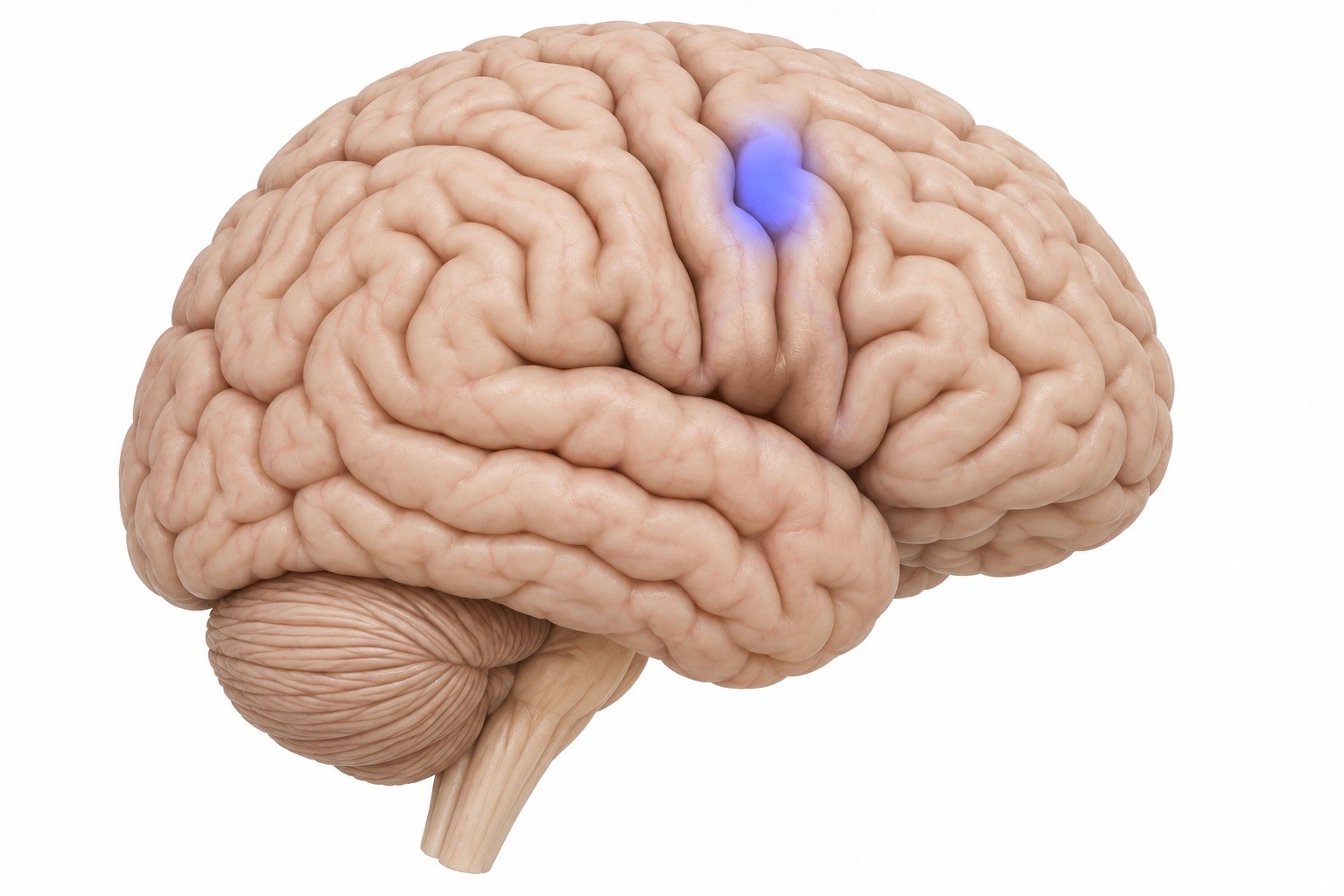 Speech motor cortex
The Neuralink implant detects signals in the speech motor cortex — the part of the brain that controls the ability to talk.
Participants simply attempt or imagine speaking. No spelling, no eye tracking, no waiting. A decoder learns the patterns behind your attempted speech and turns them into words continuously.
Those words stream as text on your phone or computer, and can also be spoken aloud in your original voice, so you can take part in conversations as they are happening once again.
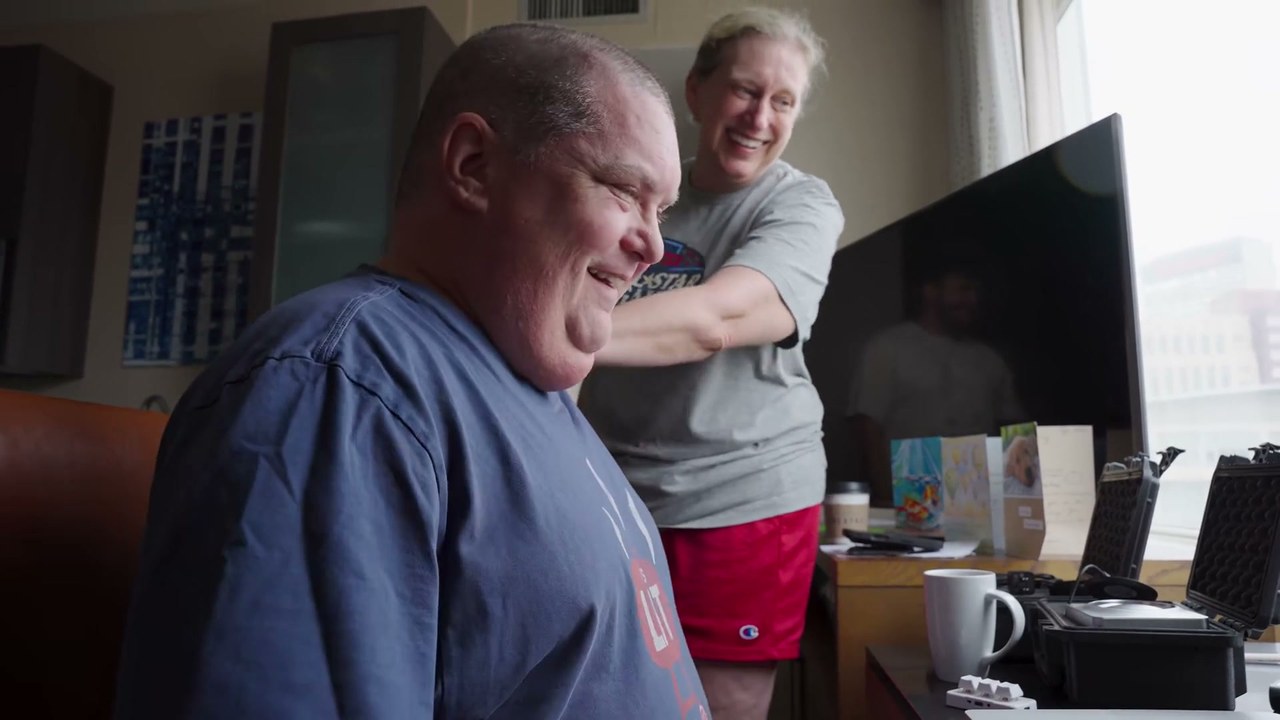
They fired it up, and he told me that he loved me in his old voice. So emotional for me to hear it the way I heard it on the phone all those years ago.
 CherylWife of VOICE participant living with ALS
We are looking for individuals who:
There is no cost to participate. The study device, surgery, and study-related visits are provided at no charge, and travel and lodging for visits to the study site are supported.
Our median participant decodes speech at roughly 50 words per minute (wpm), about six times faster than typing with an eye-gaze system. One of the core goals of this study is to push further towards the speed of a natural conversation.
Speed and accuracy vary across participants and improve as the decoder learns your patterns over the first several weeks.
After surgery there is an onboarding period during which the Neuralink team works closely with you as the decoder learns your speech patterns. Some participants hold a fluent conversation within days; for others it takes a few weeks.
After that, participants take part in regular research sessions, typically several hours per week, most of which can happen from home, plus periodic follow-up visits with the study team over the four-year study.
Decoded text appears in the Neuralink iOS app. From there it can be sent as a message, or spoken aloud through the phone in your original voice (re-created from your historical voice samples).
No. The Neuralink implant sits flush within the skull, and the electrode threads are inside the brain. There are no wires, no connectors, and no external battery pack. Once the incision heals and your hair grows back, nothing is visible.
The implant talks to your phone wirelessly and charges wirelessly through the scalp, so there is nothing to plug in and nothing to wear during the day.
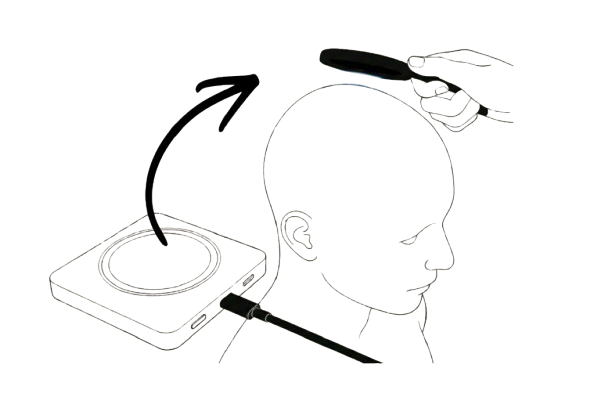
The Neuralink is charged wirelessly by placing the charger handle near the area of the implant. For convenience, participants are provided headwear (such as a hat) that houses a pouch to store the charger handle.
For every one hour of charge, the Neuralink implant can be used for 4-8 hours (depending on the implant version). The device can be used continuously while charging.
Neuralink's first study of the N1 Implant for speech. It looks at safety and at how well people with severe speech impairment can output verbal thought as text or synthesized speech.
Neuralink devices are investigational and have not been approved by the FDA or other regulatory authorities. Testimonials are from voluntary clinical trial participants sharing their personal experiences, which may not reflect all participants or future outcomes.
If you have lost the ability to speak due to ALS, PLS, spinal cord injury, or stroke, tell us about yourself in a few minutes.
Submit Interest Form (opens in a new tab) United States